




← Domain network
Auto & Vehicle
Expanding

Vehicle Loan Rates

Cars, trucks, RVs, boats and powersportsVehicleLoansAi.com

Runs as vehicle.onlineloansai.com

A wider net than auto alone: RV, marine, motorcycle and powersports financing share underwriting patterns but face far less search competition, so the same hub captures cheap, high-margin traffic alongside mainstream car buyers.

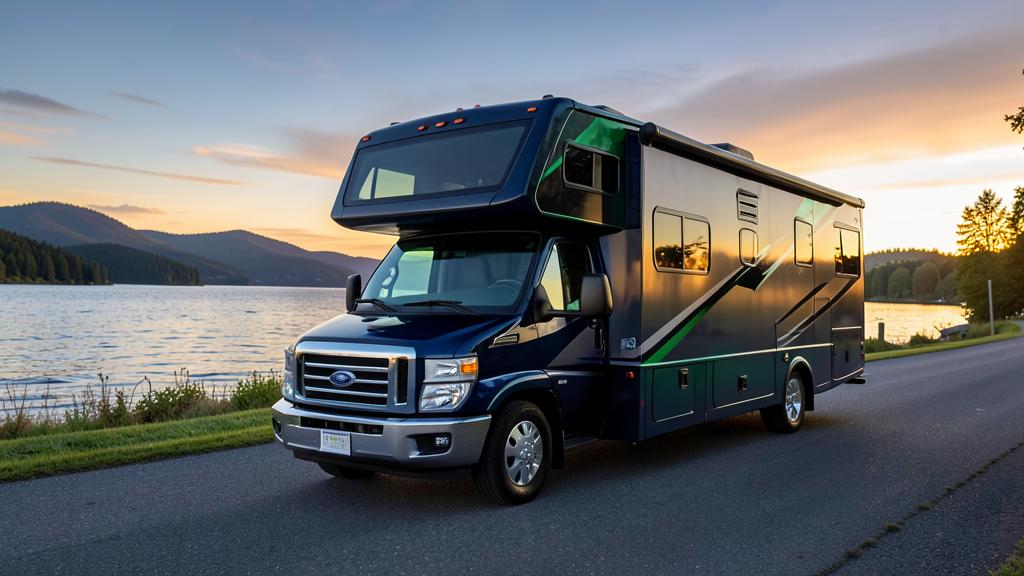
Modern Class A motorhome RV parked at a lakeside campground, financed through an RV loan
RVs and motorhomes

Vertical focus

Broad consumer vehicle purchase financing

Who this hub attracts

  • Car, RV and boat buyers
  • Private-party purchasers
  • Dealer and indirect lenders

Vehicle loan rates: what actually sets the number you are quoted

A vehicle loan rate is priced off four things a lender can verify: your credit tier, the collateral, the term and the loan-to-value ratio. Everything else is noise.

Credit tier

Lenders band applicants rather than pricing each score individually. Moving from the low-600s into the 700s usually costs less than one band of rate, which is why a two-month score repair often beats haggling.

Collateral and age

New, titled, easily resold collateral prices lowest. Older units, high-hour boats and salvage or rebuilt titles price highest — recovery value is what the rate is protecting.

Term length

Longer terms lower the payment and raise both the rate and the total interest. A 240-month marine loan is a different risk product from a 60-month car loan.

Loan-to-value

Financing more than the unit is worth — negative equity rolled in, or fees capitalised — pushes LTV past 100% and adds rate, or triggers a decline outright.

Boat loan calculator — and every other vehicle class

Marine, RV, motorcycle and auto loans all amortise the same way, so one calculator covers them. Set the amount, rate and term to see the payment before you talk to a lender. Marine and RV paper commonly runs 120–240 months; motorcycles and cars typically 36–84.

$45,000
8.50%
120 months (10 yr)

Estimated monthly payment

$558

Total interest
$21,952
Total of payments
$66,952

Illustration only. Excludes tax, title, registration, dealer fees, insurance and any lender charges. Your actual rate and payment are set by the lender after underwriting.

RV financing: longer terms, stricter collateral rules

RV lenders underwrite closer to a mortgage than a car loan. Expect a 10–20% down payment, full income documentation above roughly $100,000, and terms stretching to 20 years on Class A motorhomes. Towables — travel trailers and fifth wheels — usually cap shorter because they depreciate faster.

Two rules catch buyers out. First, age limits: many lenders will not finance a unit more than 10–15 years old at the end of the term, which quietly shortens the term available on a used coach. Second, if the RV has a kitchen, bathroom and sleeping area, it may qualify as a second home for mortgage interest deduction purposes — worth raising with your tax adviser, not your lender.

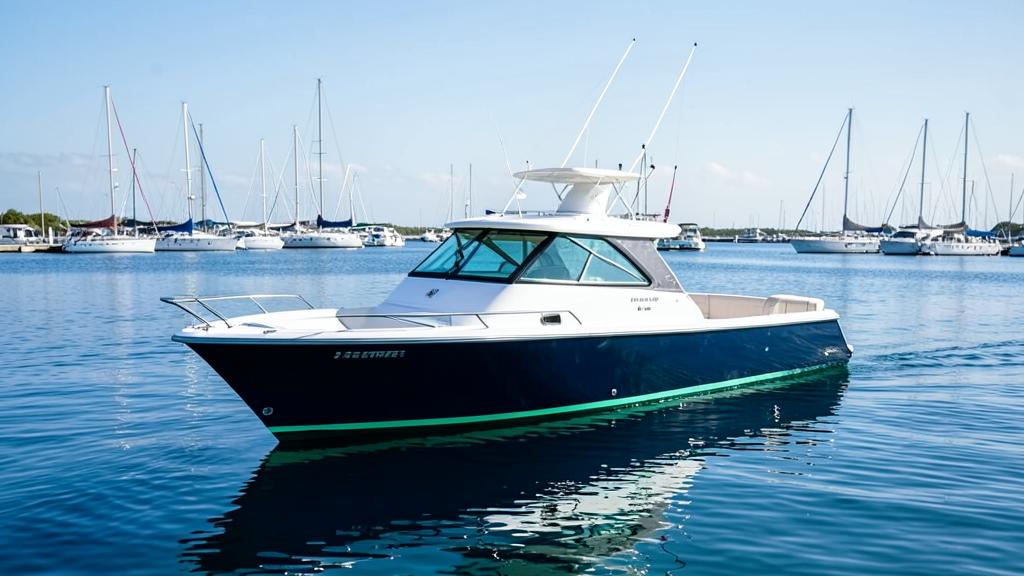
Boat and marine loans

Marine lending is collateral-led. Above roughly $25,000 most lenders require a marine survey on used vessels, and the survey value — not the sale price — sets the amount they will advance. Documented vessels add a Coast Guard title search to the process, so allow extra days at closing.

Budget beyond the payment: insurance, slip or storage fees, haul-out and winterisation typically add meaningfully to annual cost. A payment you can carry in July is the wrong test.

Motorcycle financing, powersports and off-road

Motorcycle and powersports loans are smaller and shorter than car loans — commonly $5,000–$40,000 over 24–84 months — and they price higher for the same credit tier, because recovery values are lower and seasonal.

Manufacturer captive programmes on new units frequently beat bank and credit-union pricing with promotional APRs, but those offers are tied to a specific model year and often exclude accessories and gear. On used and private-party bikes, the captive route disappears and a bank, credit union or specialist lender is the realistic option.

Private party auto loan: buying from a person, not a dealer

Not every lender writes private-party paper, and those that do price it a little above dealer loans — there is no dealer indemnity, no reconditioning and no warranty standing behind the unit. Credit unions are usually the strongest option here.

The mechanics differ from a dealer purchase. The lender pays the seller directly rather than handing you funds, a lien is recorded against the title, and the loan amount is capped at book value rather than the agreed price — so if you pay above book, the difference comes out of your pocket. Expect the lender to want the VIN, mileage, a bill of sale and clear title before funding, and expect a payoff letter first if the seller still owes money on it.

Get approved before you negotiate. A private seller has no finance office and no patience for a week of underwriting; a buyer holding an approval closes the deal.

Private-party car sale closing: seller handing over the keys and shaking hands with the buyer beside a red 1970 Ford Mustang convertible
Private-party purchases — from daily drivers to classic Mustangs — fund once the lender verifies title, VIN and book value.

Ready to compare? Start a pre-qualification and we route your details to lenders licensed in your state. We are a technology platform and referrer, not a lender — we make no credit decisions and store nothing.

Plain-language guide

How to get vehicle loan rates: the process explained

Vehicle finance is secured lending: the car, RV, boat or motorcycle is the collateral, so pricing depends as much on the asset as on the borrower. Lenders look at the vehicle's age, mileage and book value alongside credit history, and they cap how much they will advance against that value. Buyers generally choose between dealer-arranged indirect financing and a direct loan or pre-approval from a bank or credit union taken to the dealership.

Step by step, from first search to funding

  1. Step 1

    Set a realistic budget first

    Work from an all-in monthly figure that includes insurance, registration, fuel or charging and maintenance — not just the loan payment. Longer terms lower the payment but increase total interest paid and the time spent owing more than the vehicle is worth.

  2. Step 2

    Pre-qualify before you shop

    A soft-pull pre-qualification gives an indicative amount and term without a hard credit inquiry, so you can negotiate the vehicle price as a cash buyer rather than negotiating around a monthly payment.

  3. Step 3

    Compare the APR, not the payment

    APR folds the interest rate and lender fees into one comparable number. Two offers with an identical monthly payment can differ substantially in total cost once term length and fees are included.

  4. Step 4

    Complete the formal application with the lender

    The chosen institution verifies income and identity, runs a hard credit inquiry, values the vehicle and issues final terms. Multiple auto-loan inquiries within a short shopping window are typically treated as a single inquiry by common credit scoring models.

What lenders assess in this category

Credit history and score band
Payment history and the mix of existing credit set the tier you are priced in. Recent late payments and repossessions weigh more heavily than older events.
Loan-to-value (LTV)
The amount financed compared with the vehicle's book value. A larger down payment or trade-in lowers LTV and generally improves the terms offered.
Debt-to-income (DTI) and payment-to-income
Lenders test whether the new payment fits alongside existing obligations, using gross monthly income as the base.
Vehicle age, mileage and type
Older, higher-mileage, salvage-title and some specialty vehicles restrict the pool of lenders willing to finance them and can shorten the maximum term.

What drives the cost

  • Credit tier and length of credit history
  • Down payment size and resulting loan-to-value
  • New versus used, and vehicle age and mileage
  • Term length — longer terms usually carry higher rates and far more total interest
  • Whether the purchase is from a dealer or a private party
  • Add-ons rolled into the loan, such as warranties and gap coverage

What to have ready

  • Government-issued photo ID
  • Proof of income (recent pay stubs, or two years of returns if self-employed)
  • Proof of residence and Social Security number for identity verification
  • Bank statements covering the last two to three months
  • Vehicle details: VIN, year, make, model, mileage and purchase price
  • Proof of insurance, or an insurance quote for the vehicle
  • Payoff statement from the current lender if a trade-in is involved

Questions applicants ask

Does checking my options here affect my credit score?

Pre-qualification on this network uses self-reported information and, where a partner offers it, a soft credit check. Soft checks do not affect your credit score. A hard inquiry only occurs later, at the lender, once you choose to submit a formal application.

Can I get vehicle financing with poor credit?

Some participating lenders specialise in subprime and near-prime vehicle finance. Approval is not guaranteed by anyone, and lower credit tiers are generally offered higher rates, shorter terms or a larger down payment requirement.

Is a private-party purchase treated differently from a dealer purchase?

Yes. Fewer lenders fund private-party sales, the paperwork for title transfer is handled differently, and the maximum loan amount is often tied more tightly to the vehicle's book value than to the agreed sale price.

How much should I put down?

There is no universal figure. A larger down payment reduces loan-to-value, which typically improves pricing and reduces the period during which you owe more than the vehicle is worth.

Who decides my rate?

The lender does. OnlineLoansAI is a technology platform and referrer — it does not set rates, underwrite, or approve applications.

How to verify what we claim

Each statement below is checkable against the published integration specification and the compliance page. We publish no ratings, awards, approval odds or borrower testimonials, because none of those could be independently verified.

We are a technology platform, not a lender
OnlineLoansAI does not lend, broker, or advise. We operate matching software and exact-match domain hubs that connect an applicant to participating US financial institutions. Every rate, term, fee and approval decision is made by the lender, not by us.
Double opt-in before anything is transmitted
An application is not routed on submission alone. An auto-responder email asks the applicant to click a verification button confirming permission to submit. Only after that second, explicit confirmation is the record handed to a matched lender.
Nothing is stored on our platform
Applicant and lender submissions exist for the duration of the request and the notification email. We keep no applicant database and no lender database — the receiving institution is the system of record.
Consent is captured with an audit trail
TCPA consent is captured with a timestamp, IP address and user agent, and travels inside the payload delivered to the lender, so the receiving institution can evidence how permission was obtained.
Soft-pull first, hard inquiry only with your say-so
Pre-qualification uses self-reported information and, where a partner offers it, a soft credit check that does not affect a credit score. A hard inquiry only happens later, at the lender, after an applicant chooses to proceed with a formal application.
Matching rules are published, not hidden
Routing is filtered on state licensing, loan purpose, amount band, credit tier and partner daily caps. The integration specification, payload shape and filters are published openly on the lender page so partners can verify exactly what they receive.

Content reviewed 3 September 2026. Educational information only — not financial, legal or tax advice. Rates, terms, fees and approval decisions are set by the lender, never by OnlineLoansAI.

Keywords this property is built to rank for

Exact-match domain relevance, vertical-specific content and a matching intake flow target these queries and the long-tail variations around them.

vehicle loan ratesrv financingboat loan calculatormotorcycle financingprivate party auto loan

Take the applications from VehicleLoansAi.com

Participating US lenders receive consented, pre-qualified applications from this hub through a signed API webhook or an embedded widget handshake — filtered by state, amount band and credit tier.